
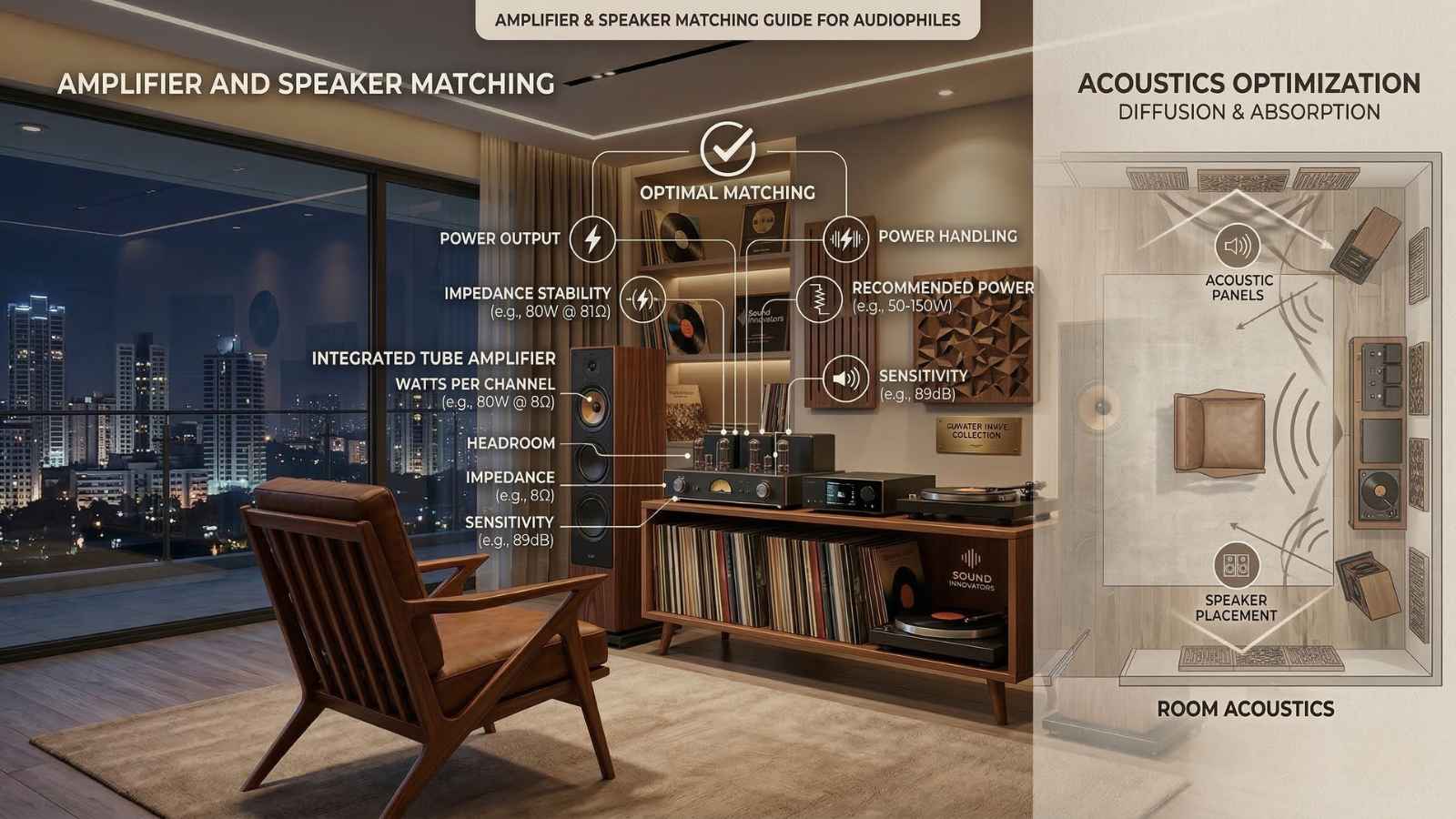
Amplifier and Speaker Matching Guide for Audiophiles
Building a high-end Hi-Fi audio system is an exciting journey for music lovers and audiophiles. While choosing premium speakers and amplifiers is important, one of the most critical aspects of achieving exceptional sound quality is proper amplifier and speaker matching.
Many audiophiles invest in expensive equipment but fail to achieve the expected performance simply because the amplifier and speakers are not matched correctly. Factors such as power output, impedance, sensitivity, and room acoustics play a significant role in how your system performs.
In this comprehensive guide, we’ll explore how to match amplifiers and speakers correctly, the key technical specifications to consider, and how to build a Hi-Fi system that delivers incredible sound performance.
What is Amplifier and Speaker Matching?
Amplifier and speaker matching refers to selecting an amplifier that can properly drive your speakers without distortion, clipping, or performance limitations.
In a Hi-Fi system, the amplifier powers the speakers and controls how accurately audio signals are reproduced. If the amplifier is too weak, the speakers may sound dull or distorted. If the amplifier is too powerful without proper compatibility, it may damage the speakers.
Proper matching ensures:
- Balanced sound reproduction
- Improved clarity and dynamics
- Optimal power delivery
- Longer lifespan of audio equipment
At Sound Innovators, our audio consultants carefully evaluate every component to design audiophile-grade Hi-Fi systems that deliver the best possible listening experience.
Why Proper Amplifier and Speaker Matching Matters
Matching amplifiers and speakers correctly is essential for achieving high-fidelity sound performance.
1. Maximum Audio Performance
Proper matching ensures the amplifier can drive the speakers efficiently, allowing them to perform at their full potential.
2. Prevents Distortion
An underpowered amplifier can cause clipping, which leads to distortion and can damage speakers.
3. Balanced Frequency Response
Correct pairing helps maintain accurate bass, clear midrange, and detailed highs.
4. Equipment Protection
Matching prevents overloading speakers or amplifiers, increasing the lifespan of the system.
For audiophiles who value precision and detail, proper system design is crucial.
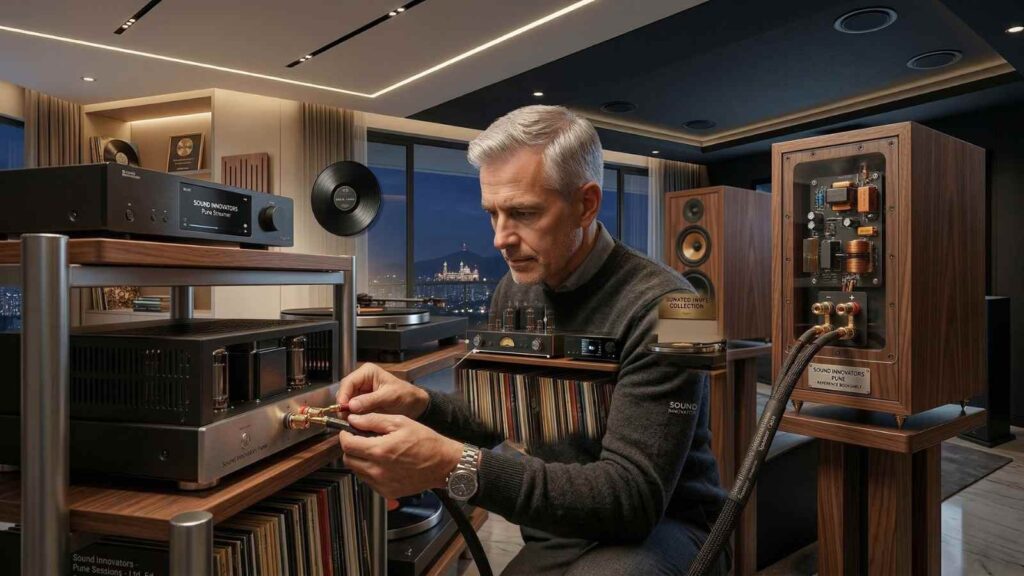
Understanding Amplifier Power (Watts)
One of the most important factors when matching amplifiers and speakers is power output, measured in watts.
What Are Watts? Simple Guide to Amplifier Power
Watts measure power the speed at which your amplifier delivers energy to speakers, like water flow from a hose. In plain terms: 1 watt = 1 joule of energy per second. Higher clean watts mean more headroom for louder, dynamic sound without distortion.
Why Watts Matter in Hi-Fi: A 100W amp into efficient Sonus Faber speakers fills a large room effortlessly, while the same watts on low-sensitivity models might strain. Focus on RMS watts (continuous power), not inflated peak claims.
Amplifier power determines how much energy is delivered to the speakers.
Typical Amplifier Types and Power Behavior
Instead of only looking at watt numbers, it helps to understand how different amplifier classes behave in terms of power, efficiency, and heat.
- Class A amplifiers
Class A stages run their output devices conducting for the full signal cycle, so they draw almost constant current and dissipate a lot of heat even at idle. Their real‑world efficiency is typically in the 20–30% range, so a design delivering 20–30 watts per channel can easily consume and dissipate several times that in heat, which is why Class A is usually reserved for purist two‑channel systems with robust power supplies and serious heatsinking.
Bryston and Accuphase stand out as premier manufacturers of elite Class A amplifiers, renowned for their exceptional accuracy, ultra-low distortion, and pure musical fidelity.
- Class AB amplifiers
Class AB keeps both devices slightly biased on around the crossover point, combining much better efficiency than Class A with lower distortion than pure Class B. In hi‑fi, you commonly see Class AB integrated amps and power amps specified from roughly 50 watts per channel up to a few hundred watts, which makes them a flexible choice for most home speakers and room sizes.
Discover Rotel, McIntosh, and Anthem the elite Class AB amplifier brands powering distortion-free hi-fi bliss for ultimate home theater mastery.
- Class G amplifiers
Class G improves on Class AB by using multiple power supply rails that switch dynamically: low voltage rails for small signals (staying Class A‑like for purity) and higher rails for big peaks. This boosts efficiency to 70–90% while maintaining low distortion, producing moderate to high power (often 100–250+ watts per channel) with less heat than straight AB. Less common in hi‑fi but popular in pro audio and some premium AV.
Arcam leads Class G amplification with smart power-switching mastery delivering effortless hi-fi dynamics for premium home audio excellence.
- Class D amplifiers
Class D uses a high‑frequency switching output stage with pulse‑width modulation, then filters it back to analog at the speaker terminals. Because the output devices are mostly either fully on or fully off, efficiency is very high, allowing compact amplifiers and subwoofer amps to deliver 100–1000 watts per channel with much less heat and lighter power supplies than linear designs.
Linn, Naim, and Lyngdorf dominate Class D amplification unleashing compact, ultra-efficient power for breathtaking hi-fi and home cinema performance.
- Tube amplifiers
Valve (tube) amplifiers can be built in several classes (often Class A or push‑pull Class AB), but in hi‑fi they typically offer modest rated power often from a few watts up to a few tens of watts per channel paired with higher output impedance and a characteristic harmonic profile that many listeners find pleasing. They are often matched with higher‑sensitivity speakers so that these lower power ratings still achieve realistic listening levels without pushing the amp into audible clipping
McIntosh and Audio Research reign supreme in tube amplification crafting warm, harmonically rich soundstages for legendary hi-fi immersion.
However, more power does not always mean better sound. What matters is matching amplifier power to speaker requirements.
Understanding Speaker Sensitivity
Speaker sensitivity measures how efficiently a speaker converts power into sound. It is typically measured in decibels (dB).
Example
A speaker with 90 dB sensitivity will produce louder sound than one with 85 dB sensitivity using the same amplifier power.
Sensitivity Guidelines
Speaker sensitivity ratings (dB at 1W/1m) tell you exactly how much amplifier power you’ll need for room-filling sound. Every 3 dB difference = double/halves your power needs for the same volume. Here’s the practical breakdown:
Below 86 dB (Power Hungry): Modern floorstanding speakers in this range convert power inefficiently, demanding 100–400W+ Class AB or D amplifiers to achieve dynamic cinema peaks without distortion or strain. Ideal for large dedicated rooms (300+ sq ft), but challenging for tube amps due to current requirements.
86–90 dB (Average/Sweet Spot): The majority of premium hi-fi speakers fall here, pairing perfectly with 50–150W Class AB amplifiers or efficient Class D designs. This versatile range handles medium rooms (150–300 sq ft) effortlessly—your go-to choice for 90% of luxury home theater installations.
Above 90 dB (Easy Drive): High-sensitivity speakers that maximize every watt, thriving on just 20–80W from tube amplifiers or compact Class D. Perfect for smaller spaces (under 150 sq ft) with maximum flexibility and minimal power consumption.
Speakers with low sensitivity require stronger amplifiers to reach optimal listening levels.
Understanding Speaker Impedance
The AC electrical resistance a speaker presents to an amplifier, measured in ohms (Ω). It’s not constant; it varies with frequency (bass dips lower, highs rise) so manufacturers list a nominal impedance (typical minimum), usually 4Ω, 6Ω, or 8Ω.
Common Impedance Ratings:
8Ω (Most Common, ~80% of speakers): Easiest load amps deliver full rated power with minimal current/heat. Safe match for any quality amplifier, from Class D to tubes.
6Ω (Moderate): Balanced sweet spot slightly more current than 8Ω but handled by 95% of modern hi-fi amps. Great for mixed systems.
4Ω (Demanding): Power-hungry floorstanders pull double current vs. 8Ω. Must use “4Ω stable” amps (McIntosh, Bryston) or risk overheating/clipping. Rewards with dynamics.
Why Impedance Matters (Critical Details):
Lower impedance = higher current drawn from the amp for the same voltage/power. Ohm’s Law: Power (W) = V² / Impedance. A 4Ω speaker pulls double the current (and risks double the heat) vs. 8Ω at same power.
- 8Ω speakers: Easiest—most amps deliver rated power comfortably, minimal heat/stress.
- 4Ω speakers: Require amps rated “4Ω stable” with high current capability (e.g., McIntosh, Bryston). They output more watts but risk overheating, clipping, or shutdown if mismatched.
Dangers of Mismatch:
- Amp not 4Ω stable + 4Ω speakers = excessive current → overheating, distortion, protection shutdown, or damage.
- Safe rule: Speaker nominal ≥ amp’s minimum rating (e.g., 8Ω speakers fine on 4–16Ω amp; never 4Ω on 8Ω-min amp).
Professional system designers ensure amplifiers are stable at the speaker’s impedance level.
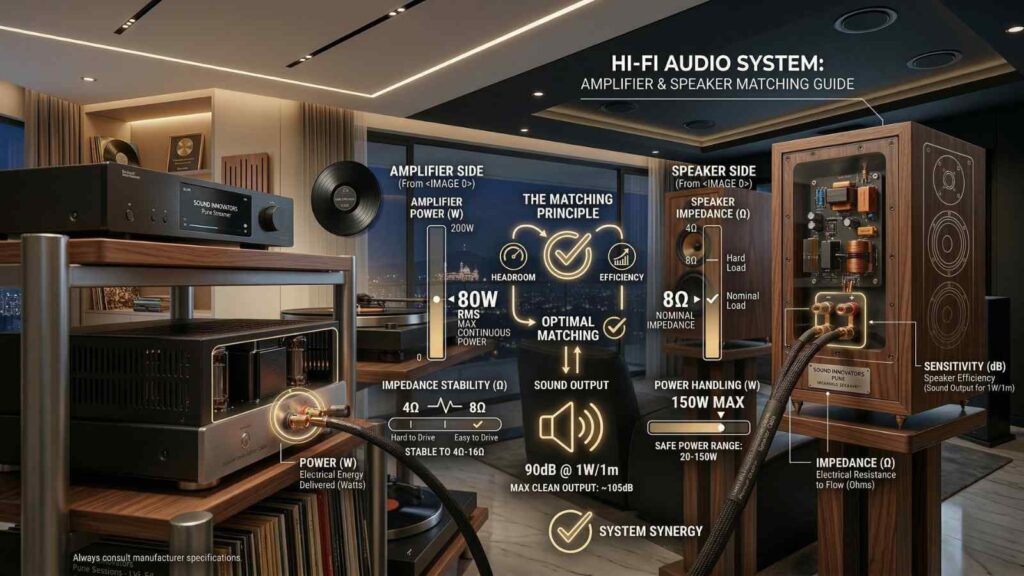
Matching Amplifier Power with Speaker Ratings
Core Rule: Speaker power ratings define safe electrical input limits to prevent voice coil damage, while your amplifier’s power delivery creates headroom for musical peaks. Target: 1.5–2x the speaker’s RMS rating at matching impedance enough reserve to avoid clipping (the #1 tweeter killer) while unlocking full dynamics.
Key Speaker Power Specs Decoded
- RMS (Continuous Power): The speaker’s safe long-term handling for hours of music/movies (e.g., 100W RMS = 100W steady without overheating). Amp minimum: Match or exceed RMS. This is your baseline.
- Program Power (typically 2x RMS): Short-term maximum for 2–3 hours of dynamic content like Dolby Atmos films. Gives breathing room for crescendos.
- Peak Power (typically 4x RMS): Instantaneous bursts (drum hits, explosions). Marketing favorite but least reliable focus on RMS instead. Never push amp into clipping to “reach” peaks.
Golden Guidelines for Perfect Matching
- Underpowering the Speaker: Amp RMS < speaker RMS → constant clipping, distortion, and thermal damage (tweeters fry first). Worst offender in loud home theaters.
- Proper Power (Ideal Zone): Amp 1.5–2x speaker RMS = 6–12 dB headroom. Clean transients, effortless volume, longevity. Example: 150W RMS speakers need 225–300W RMS amp (8Ω rating).
- Overpowering: Safe as long as < speaker RMS continues. Extra watts = reserve power, but diminishing returns above 3x.
Real-World Example:
150W RMS/300W Program/600W Peak speakers (8Ω).
- Safe amp: 200–300W RMS @ 8Ω.
- 4Ω scenario: Verify amp delivers 400W @ 4Ω (many double power). Class AB like McIntosh excels here.
Critical Factors: Impedance + Sensitivity Multiplier
Power needs explode with:
- Low impedance (4Ω): Doubles current draw → 2x power/heat.
- Low sensitivity (<86 dB): 2–3x multiplier for same SPL.
Pro Formula: Required Watts = 10^( (Target SPL – Sensitivity + Distance Penalty)/10 ). Example: 105 dB peaks, 85 dB sens, 10 ft away (~6 dB penalty) = ~200W needed.
Class-Specific Matching Tips
- Class A/AB (Bryston, Rotel): Best for 4Ω hungry loads—high current reserves.
- Class D (Naim): Efficient for high power/sensitivity combos.
- Tube: High-sensitivity only (>90 dB, 8Ω).
Importance of Amplifier Headroom
What Is Amplifier Headroom?
Headroom is the reserve power an amplifier has above your average listening level—think “unused overhead” for music’s explosive peaks (drum hits, orchestral swells, movie effects). Measured in dB, 6–12 dB headroom = 2–4x average power available instantly without distortion.
Why It Matters (The Science):
Music isn’t steady volume—dynamic range means peaks can be 10–20 dB louder than average (e.g., 10W average needs 100–1000W peak capability). Without headroom:
- Clipping occurs → square waves fry tweeters.
- Compression/distortion kills dynamics, openness.
- Flat, strained sound even at “moderate” volumes.
Real-World Impact:
- Low headroom amp (matched to average): Cannons in 1812 Overture distort.
- High headroom (2–10x): Effortless, lifelike—cymbals sparkle, bass punches. Guitarists love it for clean tone; hi-fi for realism.
How Much Do You Need?
- Critical listening: 12+ dB (10x power).
- Rule: Amp RMS 1.5–3x speaker RMS @ impedance. Class AB (McIntosh) excels; Class D efficient.
Headroom refers to extra power available in an amplifier to handle sudden peaks in audio signals.
Music’s Dynamic Peaks: Top Genres Needing Amp Headroom
Music surges with 10–30 dB peaks sudden loud bursts demanding instant power:
- Classical: Orchestra crescendos, cannon fire
- Jazz: Trumpet blasts, drum solos
- Rock/Metal: Guitar riffs, double-kick drums
- EDM: Massive bass drops
1–5W average → 100–500W peaks instantly. No headroom = clipping disaster. Class AB (McIntosh, Rotel) handles effortlessly for “search amplifier headroom music dynamics.”
Audiophiles often choose amplifiers that deliver more power than the minimum speaker requirement for cleaner sound reproduction.
Types of Amplifiers Used in Hi-Fi Systems
Understanding different amplifier types can help audiophiles select the right equipment.
Hi-fi amplifiers come in different designs to suit your setup whether pure power, control, or all-in-one convenience. Here’s your guide to pre amplifiers, power amplifiers, integrated amplifiers, monoblocks, and streaming amps. However, they require more maintenance and careful matching.
Pre-Amplifiers
Pre-amplifiers act as the control center, handling source selection, volume adjustment, tone controls, and phono equalization before sending clean line-level signals to a power amplifier. They focus purely on signal quality without speaker-driving capability, making them ideal for custom separate systems.
Advantages: Ultimate component flexibility + noise isolation from power amps. Superior phono stages for vinyl lovers.
Power Amplifiers
Power amplifiers provide raw muscle, taking preamp signals and converting them into high-current drives for speakers. With dedicated power supplies and cooling, they excel at demanding loads like 4Ω floorstanders. McIntosh MC452 pumps out 450W per channel with Autoformer tech, while Bryston 7B³ delivers 600W at 8Ω.
Advantages: Massive power reserves + optimal cooling. Perfect current delivery for difficult speakers.
Integrated Amplifiers
Integrated amplifiers combine preamp and power amp into one chassis, often with DAC, phono, and streaming perfect for modern hi-fi. Rotel RA-1592MKII offers 200W/ch with Bluetooth, while McIntosh MA352 blends tube warmth with solid-state power.
Advantages: Space-saving convenience + fewer cables. Cost-effective vs. separates for most users.
Monoblock Power Amplifiers
Monoblocks dedicate one complete amp per speaker for ultimate channel separation and power flagship territory. McIntosh MC1.25KW unleashes 1200W each, while Bryston 28B³ delivers 1000W+ per channel.
Advantages: Perfect stereo imaging + zero crosstalk. Unmatched headroom for reference systems.
Streaming Amplifiers
Streaming amplifiers integrate network playback (Roon, Tidal, AirPlay) with amplification and app control for wireless audio. Linn Klimax DSM provides 400W/ch with Exakt tech, while Rotel RAS-5000 offers BluOS multi-room streaming.
Advantages: Future-proof connectivity + whole-home audio. No traditional sources needed.
Choosing the Right Speakers for Your Amplifier
When selecting speakers, consider the following factors:
1. Room Size
Large rooms require speakers with greater power and output.
2. Listening Preferences
Music genres influence speaker selection.
3. Speaker Type
Common options include:
- Bookshelf speakers
- Floorstanding speakers
- High-end audiophile speakers
The right speaker choice ensures the amplifier can drive the system efficiently.
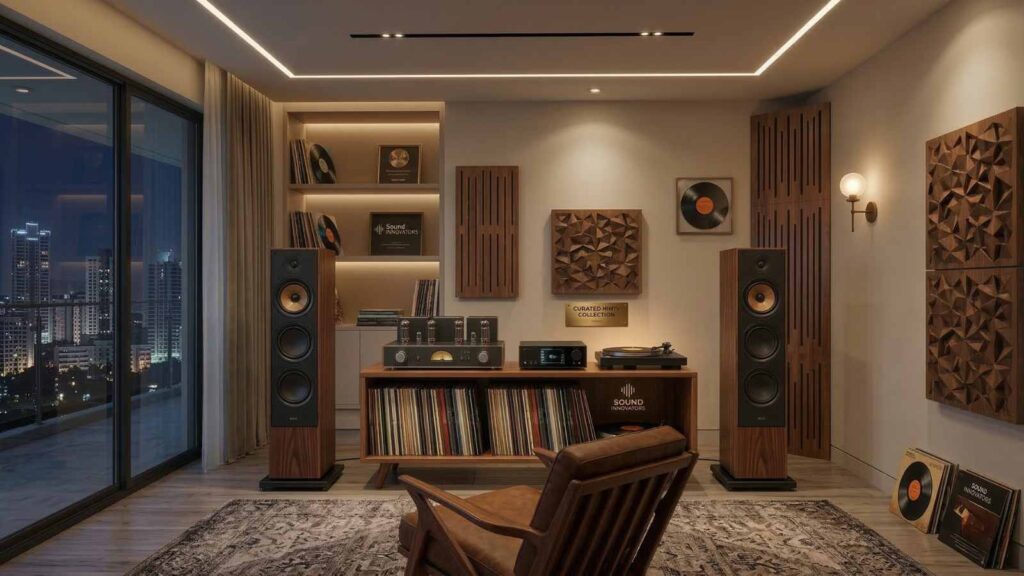
Room Acoustics and System Performance
Even perfectly matched amplifiers and speakers can perform poorly in rooms with bad acoustics.
Important acoustic considerations include:
- Speaker placement
- Wall reflections
- Listening position
- Room size
Acoustic treatments such as panels and diffusers can significantly improve sound quality.
If you’re interested in building a premium listening space, you may also enjoy our article:
👉 https://soundinnovators.in/dolby-atmos-home-cinema-setup-guide-india/
This guide explains how immersive audio systems are designed for luxury homes.
Hi-Fi vs Home Theatre Systems
Audiophiles often wonder whether to choose a Hi-Fi stereo system or a home theatre system.
While Hi-Fi focuses on pure music reproduction, home theatres prioritize cinematic surround sound.
You can learn more in our detailed guide:
👉 https://soundinnovators.in/cedia-cta-rp22-home-theatre-calibration-india/
This article explores professional calibration standards for high-performance audio systems.
Professional Hi-Fi System Design by Sound Innovators
Designing a high-end audio system requires technical knowledge and experience.
At Sound Innovators, we specialize in creating custom Hi-Fi audio environments and luxury home entertainment systems tailored to each client’s needs.
Our team focuses on:
- Precise component matching
- Acoustic optimization
- High-end audio equipment selection
- Professional calibration
You can learn more about our journey and philosophy on our About page.
Our Services for Audiophiles
Through our professional AV services, we provide complete solutions for premium home entertainment.
High-End Hi-Fi Audio Systems
We design systems that reproduce music with exceptional clarity and realism.
Custom Home Theatre Installation
Our experts create immersive cinematic environments using advanced technologies.
Smart Home Automation
We integrate AV systems with intelligent automation for effortless control.
Annual Maintenance Services
Regular system maintenance ensures your equipment continues to perform at its best.
Start Your Audiophile Journey
If you are planning to build a high-end Hi-Fi audio system, proper amplifier and speaker matching is essential for achieving the best performance.
Whether you are a serious music enthusiast or a homeowner building a premium entertainment space, expert guidance can help you select the right components.
If you’d like professional assistance designing your system, visit our Contact page to speak with our audio specialists.
Frequently Asked Questions (FAQs)
Why is amplifier and speaker matching important?
Matching ensures the amplifier can drive the speakers efficiently, delivering better sound quality while preventing distortion and equipment damage.
Can a powerful amplifier damage speakers?
Yes, if used improperly. However, when matched correctly, a powerful amplifier with sufficient headroom can deliver cleaner sound without harming speakers.
What amplifier power is ideal for Hi-Fi speakers?
The amplifier should provide power within the speaker’s recommended range, typically between 50 and 150 watts per channel for many Hi-Fi systems.
What happens if the amplifier is underpowered?
An underpowered amplifier may cause clipping and distortion, which can damage speakers over time.
Do room acoustics affect amplifier and speaker performance?
Yes. Room acoustics significantly influence sound quality, making speaker placement and acoustic treatment important for optimal performance.
Should I consult professionals when building a Hi-Fi system?
Yes. Professional audio consultants can ensure proper component matching, acoustic optimization, and system calibration, resulting in the best listening experience.
Conclusion
For audiophiles, achieving exceptional sound quality requires more than just expensive equipment. Proper amplifier and speaker matching ensures that every component works together seamlessly to deliver accurate, powerful, and immersive audio.
By understanding key factors such as power output, impedance, sensitivity, and room acoustics, you can build a Hi-Fi system that truly reflects the artist’s original recording.
With expert design and guidance from Sound Innovators, you can transform your listening space into a world-class audiophile environment that brings music to life.

One Comment
Comments are closed.