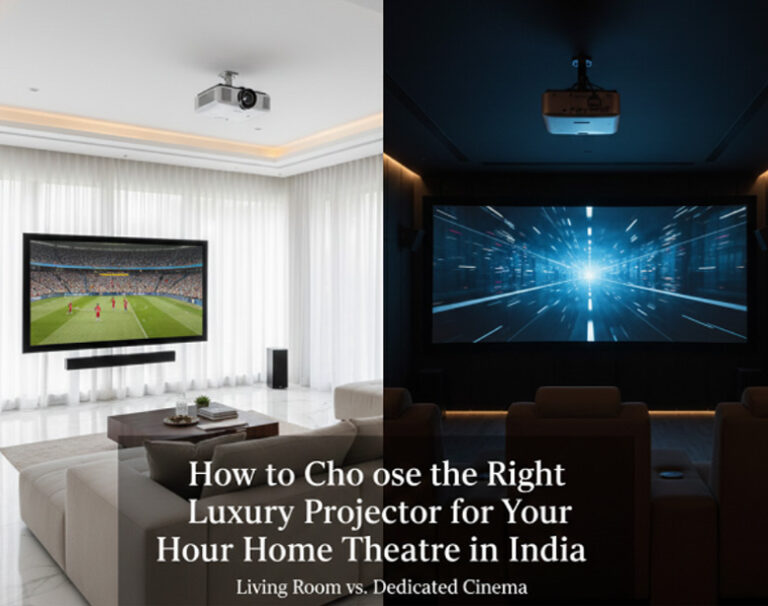
Why Interior Designers Should Involve a Home Theatre Consultant Before Finalizing Room Dimensions
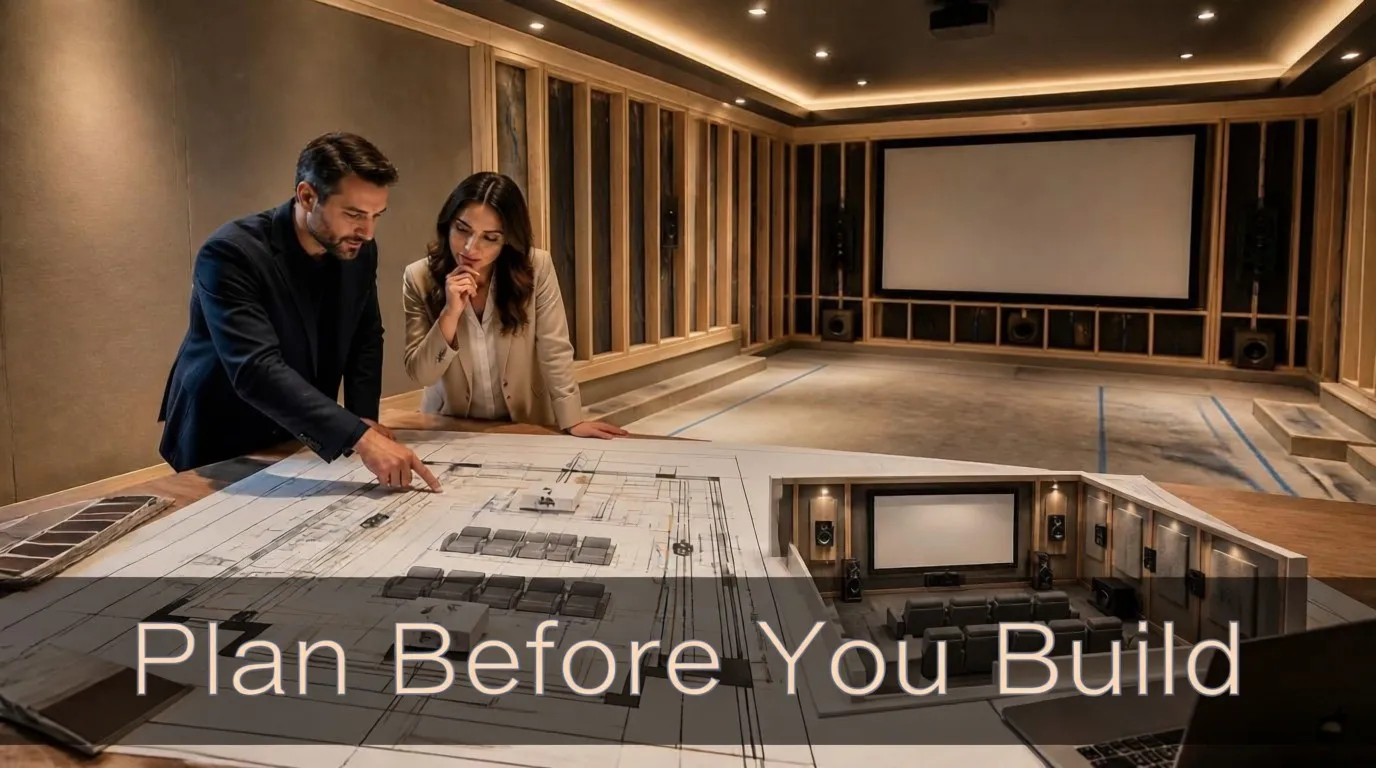
This is where most projects go wrong. Interior designers finalize a room’s footprint, ceiling height, and layout, and only then bring in an AV specialist to “fit” the technology in. A Luxury Home Theatre Consultation in India needs to happen earlier, at the client-brief stage, before the room concept is locked.
At Sound Innovators, this is the process brought to every project: understanding intent first, then translating that intent into space, performance, and design requirements together.
- 01The Question That Should Come Before the Room
- 02The First Decision: Dedicated Theatre or Media Room?
- 03A 7-Step Framework: From Client Requirements to Final Dimensions
- 04Why Technical Planning Must Come Before the Design Is Fixed
- 05A Practical Coordination Checklist for Interior Designers
- 06Decision-Making Questions Before Finalizing the Room
- 07Dedicated Theatre vs Media Room: A Quick Comparison
- 08Bring the Consultant in at the Brief Stage, Not After
- 09Frequently Asked Questions
- 10A Better Standard for Interior Design and AV Collaboration
The Question That Should Come Before the Room
Most interior design projects finalize a room’s footprint, ceiling height, and layout long before anyone asks what the client actually wants from the space. Only then does an AV specialist get called in to fit the technology around decisions that are already locked.
A Luxury Home Theatre Consultation in India works best when it happens earlier, at the client-brief stage, before the room concept is drawn. The intended experience, not the acoustics or the screen size, is what should shape the room’s dimensions in the first place.
Getting this sequence right connects interior design, architecture, and AV performance from the very start of a project rather than stitching them together at the end.
The First Decision: Dedicated Theatre or Media Room?
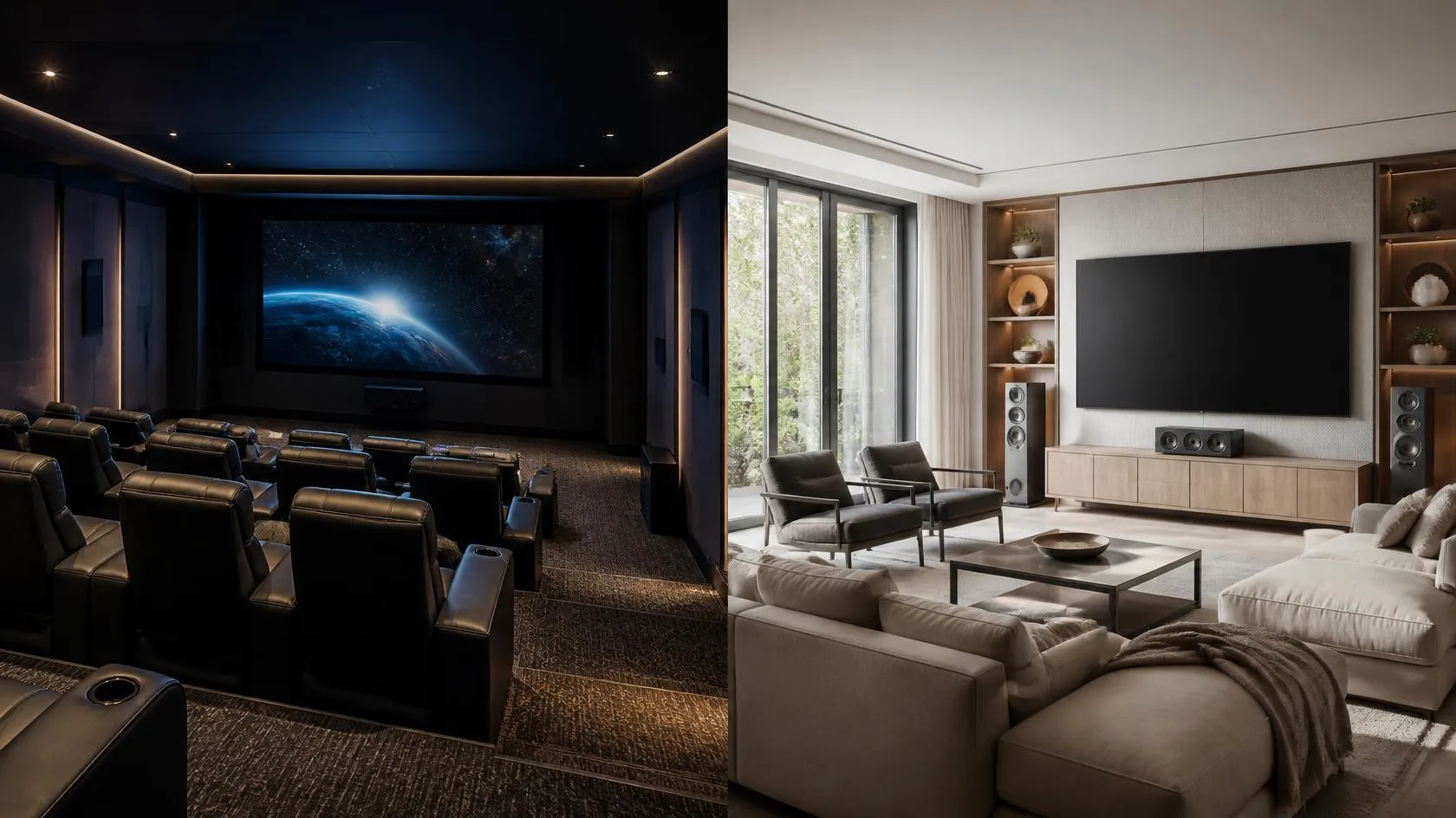
Every luxury home entertainment space falls into one of two categories, and each demands a different design priority from day one.
A dedicated home theatre is built around one goal: an immersive, cinematic experience. Here, performance leads and interior design supports it. Screen placement, speaker layout, seating geometry, acoustic treatment, sound isolation and light control are non-negotiable. The room is engineered first, decorated second.
A media room, by contrast, is a flexible, multi-use space. It hosts family gatherings, sporting events, casual movie nights, and social evenings. Here, the consultant has to balance performance with flexibility, family use, and aesthetics, none of which can dominate at the expense of the others.
These aren’t cosmetic differences. They change ceiling heights, room proportions, seating distances, and even where walls and doors should sit. An interior designer who finalizes dimensions before this distinction is made is essentially designing blind.
A 7-Step Framework: From Client Requirements to Final Dimensions
Rather than treating AV as an afterthought, Sound Innovators follows a structured, consultancy-led process closer to an architectural plan of work than a product installation checklist.
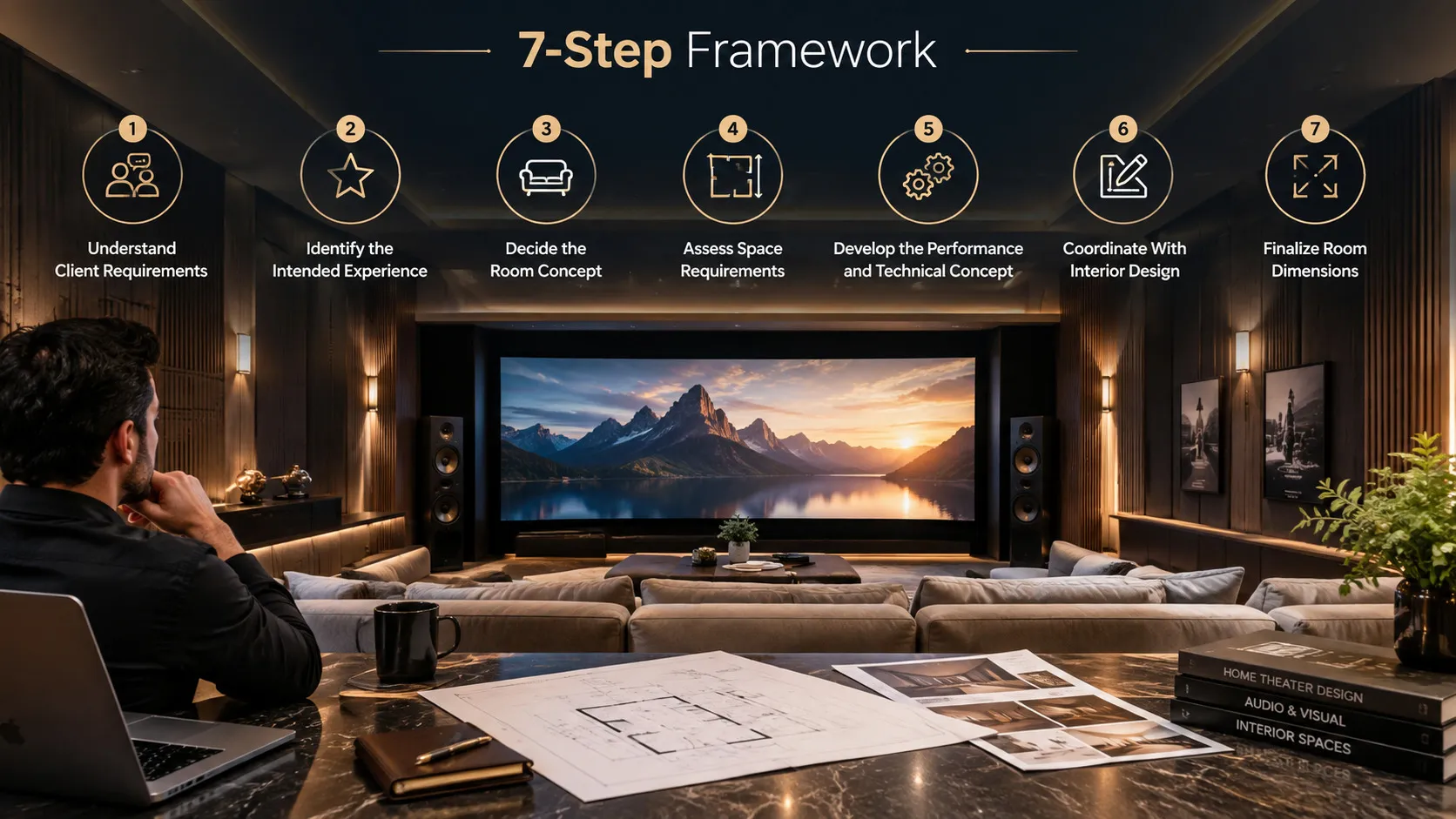
Understand Client Requirements – What experience does the client want from this space?
Identify the Intended Experience – Cinematic immersion, family entertainment, or a social hub?
Decide the Room Concept – Dedicated theatre or media room?
Assess Space Requirements – How much space is available, and what can it realistically support?
Develop the Performance and Technical Concept – Screen, speaker layout, seating, and acoustic requirements.
Coordinate With Interior Design – Ceiling, lighting, finishes, and furniture integration.
Finalize Room Dimensions – Confirm a design that satisfies both performance and aesthetics.
This sequence is deliberate. Each step feeds the next, and skipping ahead, say, finalizing dimensions at step 3 without steps 4 and 5, is exactly how designers end up retrofitting speaker bulkheads into finished ceilings or repositioning seating after the flooring is laid.
Why Technical Planning Must Come Before the Design Is Fixed

It’s tempting to read this as “speakers before design.” That’s not quite right, and it’s an oversimplification that does a disservice to both disciplines.
The real principle is this: the technical concept needs to be established early enough for the interior designer to integrate it properly. Not to override the design, but to inform it before it becomes fixed.
Once a ceiling is finalized, once a wall is closed, once flooring is laid, the room’s technical performance is largely locked in for better or worse. A home theater design and installation services partner who’s involved after those decisions can only work around them. One who’s involved before can shape a room where acoustics, lighting, and aesthetics genuinely reinforce each other, rather than compete.
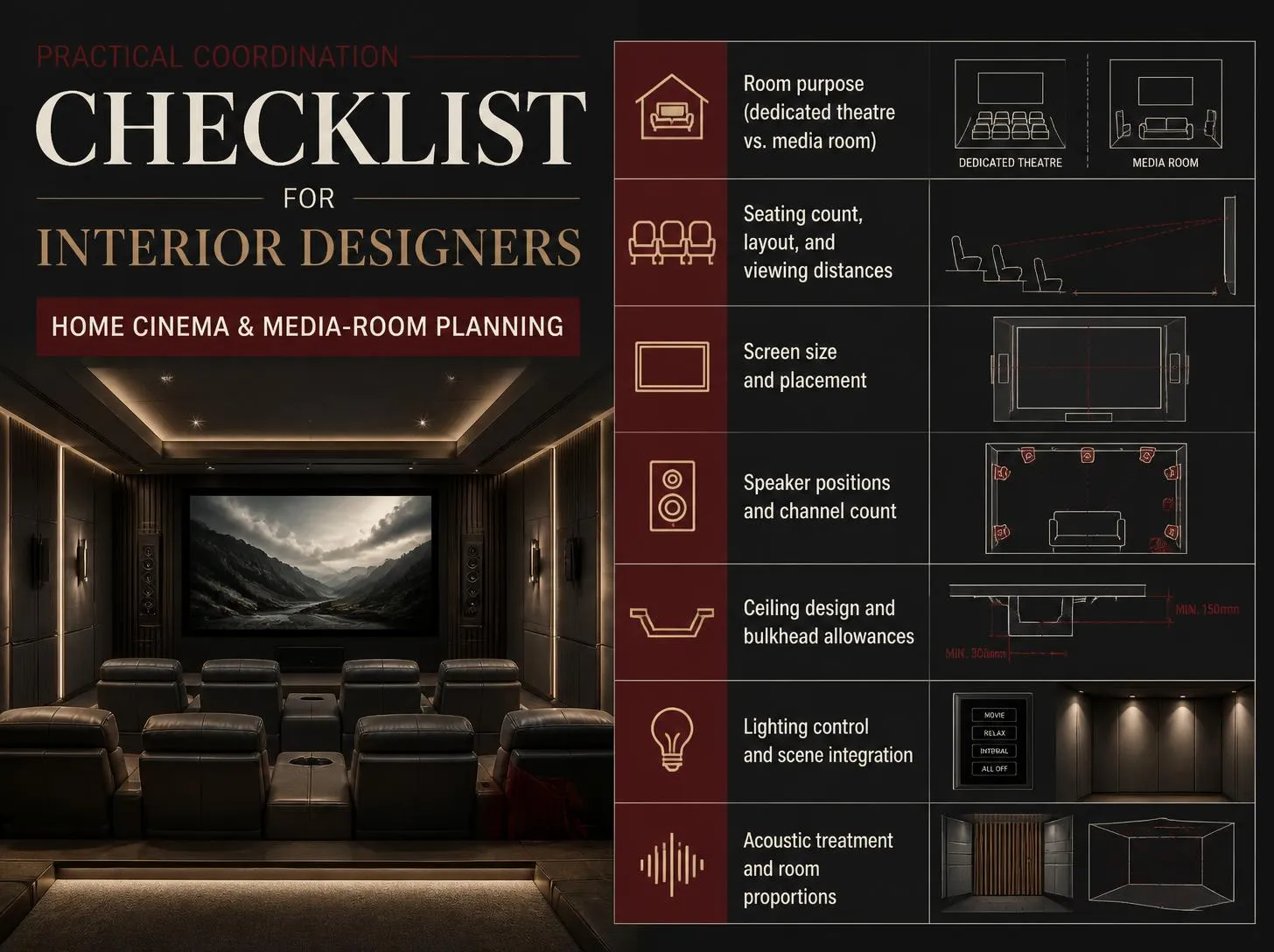
A Practical Coordination Checklist for Interior Designers
Before locking room dimensions, coordinate with your home theatre consultant on:
Room purpose (dedicated theatre vs. media room)
Seating count, layout, and viewing distances
Screen size and placement
Speaker positions and channel count
Ceiling design and bulkhead allowances
Lighting control and scene integration
Acoustic treatment, sound isolation and room proportions
Equipment requirements, including smart home automation systems
Bringing these into the design conversation early, rather than after drawings are finalized, is what separates a room that merely contains AV equipment from one that’s genuinely engineered around the experience.
Decision-Making Questions Before Finalizing the Room
What experience does the client want?
Establish whether the priority is cinematic immersion, family entertainment, or social flexibility. This single answer shapes every downstream decision.
Is it a dedicated theatre or a media room?
A dedicated theatre prioritizes performance; a media room balances performance with everyday flexibility and family use.
How many people will regularly use the space?
Seating count and viewing angles directly affect the minimum room dimensions required.
What performance level is expected?
A reference-grade cinematic setup requires different acoustic volume and treatment than a casual family media room.
Does the available space actually support these requirements?
Some rooms need to be resized, reshaped, or relocated once technical requirements are known.
What technical elements must be coordinated with the interior design?
Ceiling allowances, speaker positions, and lighting zones need to be agreed upon before finishes are finalized.
Dedicated Theatre vs Media Room: A Quick Comparison
| Dedicated Home Theatre | Media Room |
|---|---|
| Performance leads, design supports it | Performance is balanced with flexibility |
| Single, immersive purpose | Multi-use: family, social, sporting events |
| Room engineered first, decorated second | Aesthetics and everyday livability carry equal weight |
| Screen, speakers, seating and acoustics are non-negotiable | AV integrates around furniture and family use |
| Sound isolation and light control are essential | Sound isolation and light control are optional |
| Fixed seating geometry | Flexible, movable seating |
← Scroll table on mobile →
Neither approach is superior to the other. The choice depends entirely on how the client intends to use the space, which is exactly why that question needs to be answered before the room is drawn.
Bring the Consultant in at the Brief Stage, Not After
The most valuable point in any luxury AV project isn’t the installation. It’s the conversation that happens before the room is even drawn.
As one of India’s leading home theater design and installation services providers, and an active implementer of technologies from ASCENDO, Wisdom Audio, Trinnov, StormAudio, Crestron, Control4, JVC, Barco, Sonos, and McIntosh, Sound Innovators works directly with interior designers, architects, and builders across Mumbai, Pune, Bengaluru, and Gurugram, starting at the client-brief stage, not after the room is designed.
If you’re an interior designer working on a high-end residential project, the smartest move isn’t picking finishes first and hoping the AV fits. It’s involving your home theatre consultant before the dimensions are locked. That single decision determines whether the room merely accommodates technology or is genuinely built around the experience the client asked for.
Our structured, RIBA (Royal Institute of British Architects)-aligned consultancy process lays out exactly how we plug into your project from the earliest design stages, so nothing needs to be undone once construction begins. Ready to bring performance and design together from the start? Consult with Sound Innovators before finalizing your next project’s room dimensions.
Frequently Asked Questions
A Better Standard for Interior Design and AV Collaboration
The future of luxury interior design is not about picking finishes first and hoping the AV fits. It is about understanding how client intent, architecture, and technology work together from the earliest brief.
Bringing the home theatre consultant in early provides the foundation for that process. It helps both disciplines make informed decisions about room concept, seating, speakers, acoustics, screens, and finishes before anything is locked in.
If you’re an interior designer working on a high-end residential project, involve your home theatre consultant before finalizing dimensions. It’s the difference between a room that accommodates technology and one that’s built around an experience.