Why ‘Measurement-Based’ Home Theatre Design Is the Next Big Standard for Luxury Homes in India
Instead of choosing equipment first, professional designers begin with the room. They study its dimensions, acoustics, seating positions and viewing requirements. This approach helps create a cinema experience that feels balanced, immersive and purpose-built.
For homeowners planning a private cinema, a Luxury Home Theatre Consultation in India can help identify these requirements before equipment and installation decisions are finalised.
- 01What Is Measurement-Based Home Theatre Design?
- 02Why Expensive Equipment Alone Cannot Guarantee Better Performance
- 03Why the Room Should Come Before the Equipment
- 04What Should Be Measured Before Designing a Luxury Home Theatre?
- 05How Measurement-Based Design Influences Speaker Selection
- 06Why Home Theatre Acoustic Design Matters
- 07Why Seating Position Matters in Luxury Home Cinema Design
- 08Why Dolby Atmos Requires Proper Room Planning
- 09From Measurement to Calibration: The Professional Design Process
- 10Measurement-Based Design vs Equipment-First Design
- 11Why Measurement-Based Home Theatre Design Is Becoming Important in India
- 12What Does a Luxury Home Theatre Consultation Include?
- 13Frequently Asked Questions
- 14A Better Standard for Luxury Home Cinema
What Is Measurement-Based Home Theatre Design?
Measurement-based design means using the physical and acoustic characteristics of a room to guide the cinema design. The objective is not simply to install premium equipment. It is to achieve predictable and consistent system performance.
A professional assessment can consider:
→
Room length, width and height
→
Seating and listening positions
→
Screen viewing distance
→
Speaker-to-seat distances
→
Room geometry
→
Acoustic behaviour
→
Speaker coverage
→
Bass distribution
→
Required sound pressure levels
→
Calibration requirements
This approach connects the room, architecture and AV system before installation begins.
Why Expensive Equipment Alone Cannot Guarantee Better Performance
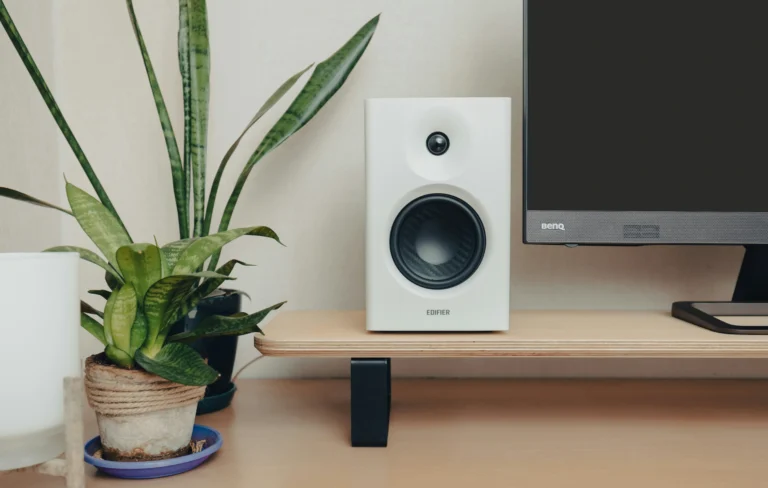
Premium equipment can deliver exceptional performance, but the room still plays a critical role. A high-end speaker can sound very different when placed in two different rooms.
Reflections, room modes, speaker positioning and seating locations can change what the listener hears. Poor placement can also reduce clarity and imaging, despite using expensive components.
That is why a professional cinema should be treated as a complete system. The room, acoustics, speakers, amplification, processing and calibration must work together.
Why the Room Should Come Before the Equipment
The room establishes many of the design parameters for a private cinema. Its dimensions influence speaker placement, screen size, seating layout and acoustic behaviour.
A professional Luxury Home Theatre Design in India should therefore consider the architecture before final equipment selection.
This is particularly important for:
→
Dedicated cinema rooms
→
Large luxury villas
→
Premium apartments
→
Multi-purpose entertainment rooms
→
Architecturally integrated cinemas
Planning early also makes it easier to conceal cables, speakers, acoustic treatments and equipment.
What Should Be Measured Before Designing a Luxury Home Theatre?
A measurement-based assessment can examine several important factors:
→
Room dimensions: Determine available space and layout possibilities.
→
Ceiling height: Influences screen proportions and immersive speaker placement.
→
Seating distance: Helps establish viewing and listening requirements.
→
Speaker-to-seat distance: Influences output and coverage requirements.
→
Viewing distance: Helps determine an appropriate screen size.
→
Acoustic response: Identifies reflections and frequency-related problems.
→
Bass behaviour: Helps identify areas requiring bass management.
→
Room geometry: Influences sound distribution and speaker positioning.
→
Speaker coverage: Helps provide a consistent experience across seats.
These measurements create a technical foundation for the design rather than relying only on product specifications.
How Measurement-Based Design Influences Speaker Selection
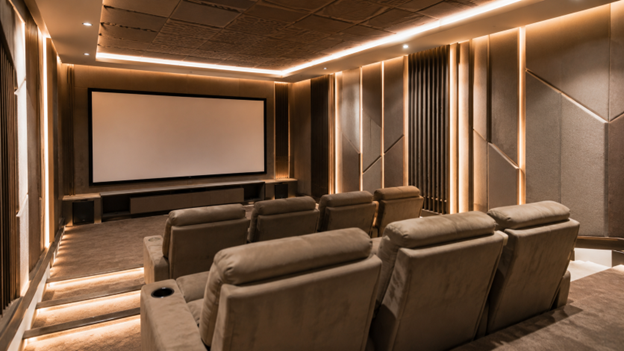
Speaker selection should follow the requirements of the room and listening positions. The largest or most expensive speaker is not automatically the right choice.
Designers can consider listening distance, room size, dispersion, directivity, required output and seating arrangement. These factors help determine how speakers should interact with the space.
Subwoofer selection also requires careful planning. Multiple subwoofers may sometimes provide more consistent bass distribution than relying on a single unit.
The objective is controlled and immersive performance across the intended listening area.
Why Home Theatre Acoustic Design Matters
Home Theatre Acoustic Design is essential because sound interacts continuously with the room. Walls, ceilings, floors and furniture can reflect, absorb or scatter sound.
Uncontrolled reflections can affect clarity and imaging. Low-frequency energy can also behave unevenly throughout the room.
A considered acoustic strategy can address:
→
Early reflections
→
Bass control
→
Sound absorption
→
Diffusion
→
Acoustic isolation
→
Dialogue intelligibility
→
Immersive sound performance
Acoustic elements can also be integrated into walls, ceilings and architectural features without compromising the visual character of a luxury interior.
Why Seating Position Matters in Luxury Home Cinema Design
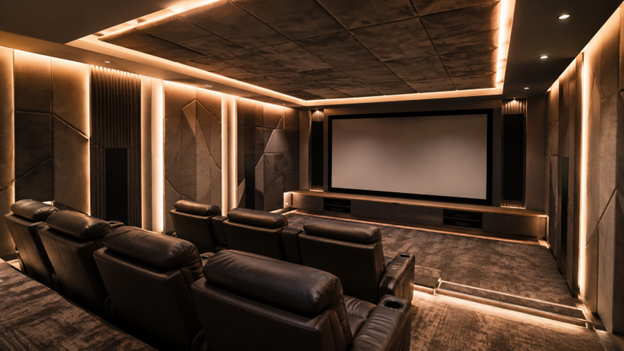
Seating is not simply a furniture decision. It is an important part of the acoustic and visual design.
The primary listening position determines speaker distances and listening angles. Multiple seating rows introduce additional coverage requirements.
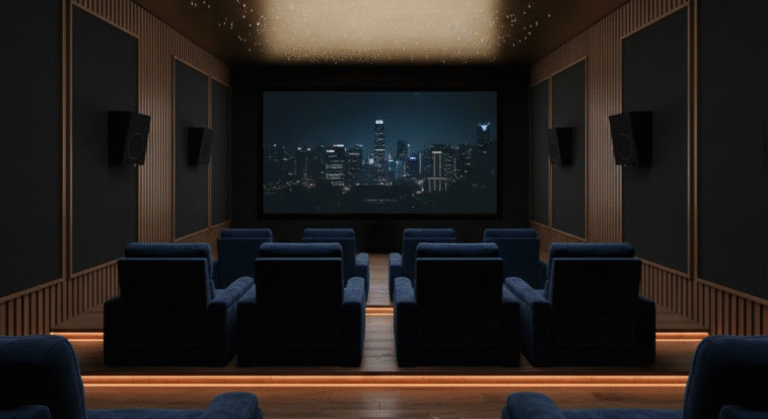
A well-planned Luxury Home Cinema Design considers:
→
Viewing angle
→
Listening position
→
Speaker distance
→
Screen distance
→
Seating height
→
Multiple seating rows
→
Sound coverage across seats
The goal is to provide a consistent experience rather than designing the system around one seat alone.
Why Dolby Atmos Requires Proper Room Planning
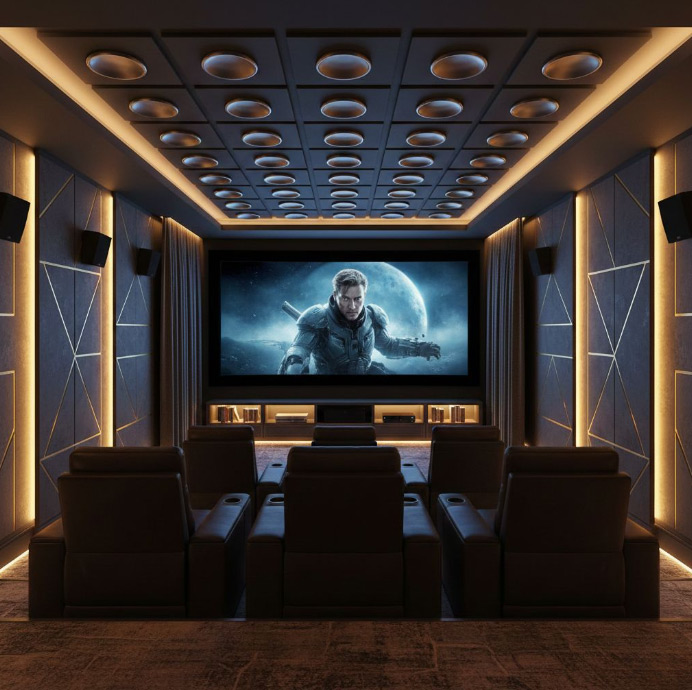
A Dolby Atmos Home Cinema Setup involves more than adding speakers to the ceiling. Immersive audio depends on accurate speaker positioning and appropriate coverage.
The room layout influences where height channels, surround speakers and other system components should be positioned. Listening positions also affect the relationship between the speakers and the audience.
Professional calibration is then used to optimise timing, levels and system integration. Proper planning helps create a more convincing three-dimensional soundstage.
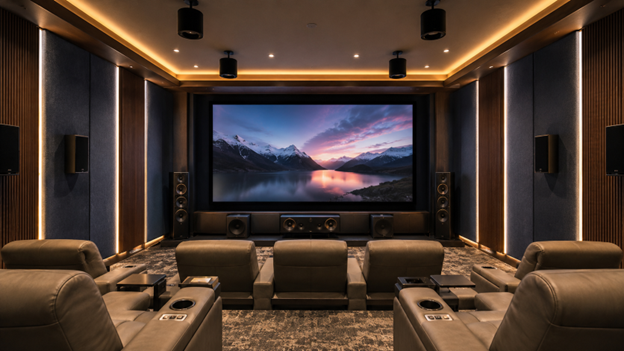
From Measurement to Calibration: The Professional Design Process
A professional Home Theatre Design and Installation Services in India approach can follow a structured workflow:
1.
Room assessment – Understand the architecture and intended use.
2.
Measurement – Record room dimensions and relevant acoustic characteristics.
3.
Seating analysis – Establish primary and secondary listening positions.
4.
Acoustic planning – Determine treatment and isolation requirements.
5.
Speaker planning – Position speakers and subwoofers according to the room.
6.
Equipment selection – Match components with actual performance requirements.
7.
Architectural integration – Coordinate technology with the interior design.
8.
Installation – Implement the planned system accurately.
9.
Calibration – Optimise levels, timing and system response.
10.
Performance verification – Check the final system against the design objectives.
This process turns a collection of components into a properly integrated cinema system.
Measurement-Based Design vs Equipment-First Design
| Equipment-First Approach | Measurement-Based Approach |
|---|---|
| Starts with products | Starts with the room |
| Focuses heavily on specifications | Focuses on system performance |
| Equipment is selected first | Equipment follows room requirements |
| Seating may be considered later | Seating is planned early |
| Acoustics can become an afterthought | Acoustics are integrated into design |
| Installation is the main focus | Engineering guides the installation |
| Performance may vary between seats | Coverage is planned for intended seats |
| Calibration may happen at the end | Measurement guides optimisation |
← Scroll table on mobile →
The measurement-based approach does not reject premium equipment. Instead, it ensures that equipment is selected and configured for the environment where it will operate.
Why Measurement-Based Home Theatre Design Is Becoming Important in India
Luxury residential projects in India increasingly combine architecture, technology and entertainment. Homeowners may expect private cinemas to deliver high performance while remaining visually integrated with the property.
This makes planning particularly valuable for luxury villas, premium apartments and dedicated entertainment spaces.
A measurement-based approach can support:
→
Concealed AV equipment
→
Integrated acoustic treatment
→
Architectural speaker placement
→
Smart-home control
→
Dedicated cinema rooms
→
Premium multi-room entertainment
The result is a cinema designed around the property rather than a system added after construction.
What Does a Luxury Home Theatre Consultation Include?
A Luxury Home Theatre Consultation in India should help define the technical and architectural requirements before major decisions are made.
Depending on the project, consultation can cover:
→
Room assessment
→
Physical measurements
→
Seating analysis
→
Screen planning
→
Speaker positioning
→
Acoustic recommendations
→
Equipment selection
→
Smart-home integration
→
Installation planning
→
System calibration
For homeowners, this approach provides a clearer path from an empty room to a complete cinema environment.
Frequently Asked Questions
A Better Standard for Luxury Home Cinema
The future of luxury home cinema is not simply about adding more expensive equipment. It is about understanding how technology, architecture and acoustics work together.
Measurement provides the foundation for that process. It helps designers make informed decisions about seating, speakers, acoustics, screens and calibration.
For homeowners planning a dedicated cinema, a professional Luxury Home Theatre Consultation in India can establish the right design direction before installation begins.